When vehicle owners in Upstate South Carolina start researching how to make their paint look vibrant and keep it protected long-term, two professional auto-detailing services come up repeatedly: paint correction and ceramic coating. They are frequently mentioned together, often bundled as a single restoration package, and easily confused with one another. This makes it challenging for drivers to decide which service their vehicle actually requires.
The straightforward explanation is that paint correction and ceramic coating perform two entirely different jobs:
- Paint correction improves how your vehicle’s paint looks by physically reducing surface defects such as swirl marks, light scratches, and oxidation.
- Ceramic coating protects the restored surface and makes routine washing significantly easier.
This comprehensive guide from Infinite Brilliance Detailing, LLC explains the difference between these two premium services, why the application sequence matters, and how to determine whether your vehicle needs paint correction, ceramic coating, or a combination of both.
The Short Answer: Correction Restores, Coating Protects
To put it in simple terms: paint correction restores the finish, while ceramic coating protects it.
Paint correction is a specialized machine-polishing process that reduces swirl marks, light scratches, and haze by leveling a microscopic layer of clear coat. On the other hand, a professional ceramic coating is a liquid polymer layer applied to the paint that cures into a durable shield, enhancing gloss, adding chemical resistance, and creating a hydrophobic surface. One service alters the existing clear coat; the other adds a protective layer over it.
This distinction drives every decision regarding exterior vehicle care:
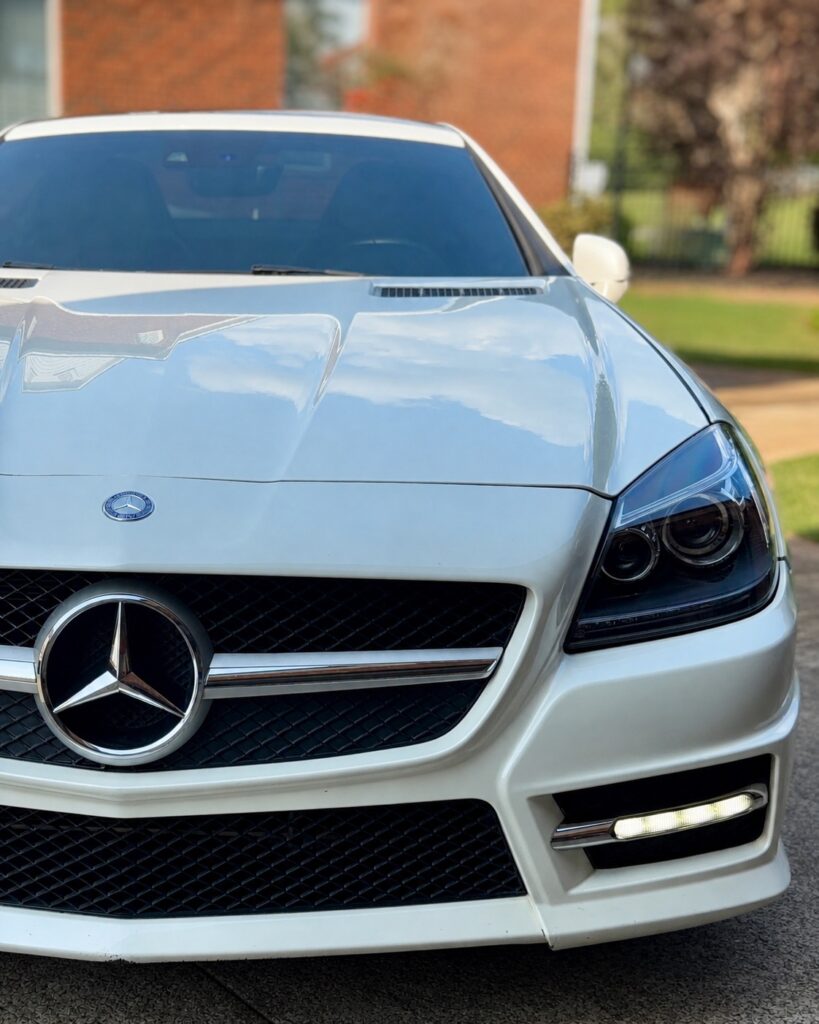
- If your primary concern is surface appearance (swirls, fine scratches, dullness, or hazy reflections), paint correction is the specific service required.
- If your goal is protecting paint that is already in excellent condition while simplifying routine maintenance, ceramic coating is the service you need.
- If you want both (a high-gloss, defect-free paint finish that remains easy to maintain), paint correction comes first, followed directly by ceramic coating.
Side-by-Side: How the Two Services Compare
Understanding the operational differences between paint correction and ceramic coating helps set realistic expectations for your vehicle investment:
| Service Attribute | Paint Correction | Ceramic Coating |
| Primary Purpose | Restores paint appearance by reducing surface defects | Protects the paint finish and simplifies maintenance |
| Action on Paint | Safely removes a microscopic layer of clear coat | Adds a thin, durable protective layer on top of the paint |
| Defect Removal | Yes, removes swirls, marring, and light scratches within the clear coat | No, it does not remove or fill existing paint defects |
| Environmental Protection | Adds no protection on its own | Yes, protects against UV rays, bird droppings, and contaminants |
| Gloss Enhancement | Restores clarity and reflection by smoothing the surface | Enhances depth and slickness on properly prepared paint |
| Scratch Resistance | Does not prevent future scratches | Aids in light marring resistance, but is not scratch-proof |
| Required Upkeep | Requires careful hand washing to avoid reintroducing swirls | Requires periodic maintenance washing with pH-neutral soaps |
What Each Service Does and Does Not Do
To make an informed decision for your car, truck, or SUV, it helps to examine both services individually.
Paint Correction: Refinement, Not Body Repair
Paint correction is a process of refinement. At Infinite Brilliance Detailing, owner-operator Jaime Jimenez uses precision dual-action machine polishers, tailored pads, and specialized polishing compounds to level the clear coat around surface defects. This allows light to reflect evenly, creating deep mirror-like reflections.
What Paint Correction Can Achieve:
- Reduces circular swirl marks caused by automatic car washes and dry-wiping.
- Smooths out light marring and shallow scratches that do not penetrate the clear coat.
- Removes dullness, haze, and mild oxidation caused by sun exposure in South Carolina.
- Eliminates buffer holograms left behind by improper polishing techniques.
What Paint Correction Cannot Achieve:
- It cannot repair deep scratches that cut through the clear coat into the color coat or primer.
- It will not fill rock chips or restore peeling clear coat (clear coat failure).
- It does not stop new scratches from forming if improper washing habits continue.
Ceramic Coating: Protection, Not Paint Repair
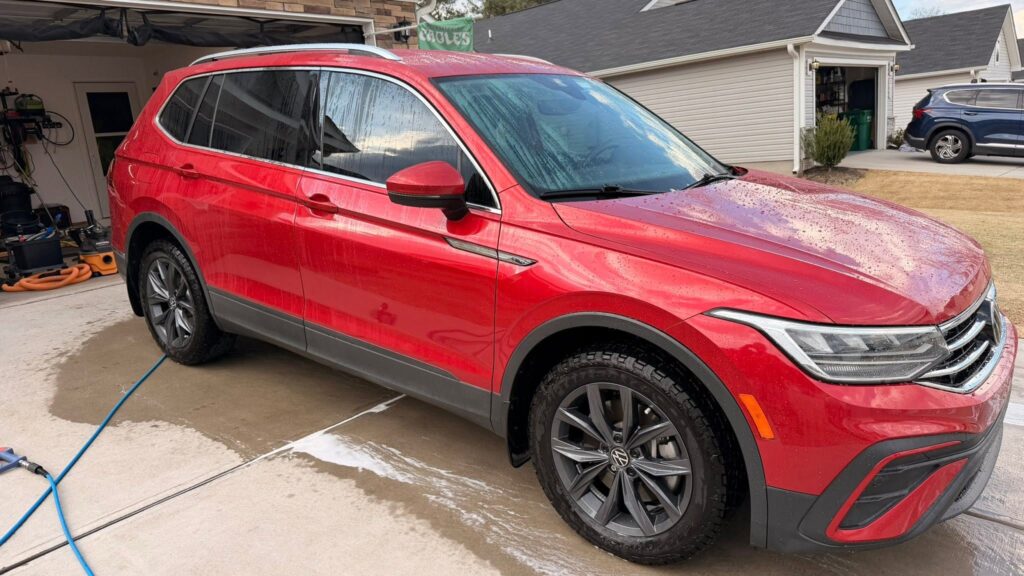
A ceramic coating is applied as a liquid and chemically bonds to the vehicle’s paint, curing into a hard, clear protective shield. Its core value lies in long-term surface preservation and effortless cleaning.
What Ceramic Coating Can Achieve:
- Hydrophobic Water Beading: Water, mud, and road grime slide off the paint far more easily, keeping the vehicle cleaner between washes.
- Chemical & UV Protection: Shields the finish against harmful ultraviolet rays, acid rain, bug splatter, tree sap, and bird droppings.
- Enhanced Gloss: Adds an ultra-slick, glass-like topcoat that amplifies paint depth on properly prepped panels.
- Simplified Maintenance: Dirt releases with minimal effort during regular hand washes.
What Ceramic Coating Cannot Achieve:
- It does not hide or fill existing swirl marks or scratches.
- It does not make paint 100% scratch-proof or rock-chip-proof.
- It does not eliminate the need for routine hand washing.
For complete details on our mobile protective coatings, visit our dedicated Infinite Brilliance Detailing Ceramic Coating Service Page.
Why Paint Correction Must Come Before Ceramic Coating
This is the single most critical point in paint care: a ceramic coating locks in the exact condition of the paint underneath it.
Because ceramic coatings are completely transparent, they act like a magnifying glass over your paintwork. Applying a ceramic coating over swirled or oxidation-damaged paint will permanently seal those defects under a durable topcoat. Instead of hiding flaws, the increased gloss of the coating will highlight every swirl mark beneath it.
The Professional Process Sequence:
- Decontamination Wash: Hand wash followed by iron remover and clay bar treatment to clear all bonded surface contaminants.
- Paint Inspection: Examining clear coat health under high-intensity inspection lighting.
- Machine Paint Correction: Polishing the panels to the agreed-upon level to eliminate defects.
- Isopropanol Panel Wipe: Removing all polishing oils and residues so the paint is completely bare.
- Ceramic Coating Application: Applying the coating panel by panel to seal and protect the restored finish.
Attempting to polish paint after a ceramic coating has been applied will instantly strip the coating away. Therefore, performing paint correction first ensures that your investment in protection is spent on a flawless finish.
Do New Vehicles Need Paint Correction Before Ceramic Coating?
A common myth among vehicle owners in Boiling Springs and Spartanburg is that brand-new cars straight from the dealership do not require polishing. In reality, almost every new vehicle benefits from at least a light paint correction before receiving a ceramic coating.
During factory transport, rail transit, dealership lot storage, and aggressive dealer prep washes, new vehicles frequently acquire light swirl marks, transit wrap adhesive, and fallout. While a new car rarely requires multi-stage heavy compounding, a light finishing polish removes minor transport marring and maximizes clear coat clarity, ensuring the ceramic coating bonds directly to bare paint.
When working with local clients, Infinite Brilliance Detailing assesses every new vehicle individually to determine whether a light polish or simply a surface decontamination is required prior to coating.
Choosing the Right Option for Your Vehicle
Not every car requires both services. Use this practical decision guide based on your vehicle’s condition and long-term ownership goals:
| Vehicle Condition & Goals | Recommended Service |
| Paint is swirled or hazy, and you want to restore gloss | Mobile Paint Correction |
| Paint is in excellent condition, and you want easy cleaning | Ceramic Coating Protection |
| Paint is swirled, and you want long-term gloss & protection | Paint Correction + Ceramic Coating |
| Deep scratches, bare metal exposed, or clear coat peeling | Body Shop Repair / Touch-up Paint |
| Brand new vehicle purchase intended for long-term ownership | Inspection, Light Prep Polish + Ceramic Coating |
Practical Local Considerations:
For drivers navigating daily commutes along I-26 or I-85 between Boiling Springs, Spartanburg, and Greenville, environmental factors quickly accumulate. High summer temperatures, tree sap, intense UV rays, and heavy spring pollen seasons in South Carolina create harsh conditions for vehicle paint.
- If you plan to sell or trade in a vehicle short-term, a single-stage paint correction restores surface gloss and resale value efficiently.
- If you own a daily driver or enthusiast vehicle that you intend to keep for several years, combining paint correction with ceramic coating provides maximum value by preserving clear coat health and saving hours of washing time.
Common Misconceptions Clarified
- “Ceramic coatings eliminate scratch risks.” False. While coatings add minor surface hardness, they cannot prevent deep scratches from keys, automatic wash brushes, or abrasive towels.
- “Paint correction removes too much paint.” False when done professionally. Modern correction relies on micro-abrasives that remove only a fraction of a mil of clear coat, preserving the paint’s long-term integrity.
- “Coated vehicles never need washing.” False. Hydrophobic properties mean dirt washes off far easier, but regular hand washing with proper microfiber towels remains essential.
Essential Questions to Ask Your Detailing Specialist
Before booking a service for your vehicle, consider asking your mobile detailer these key questions:
- What is the current condition of my paint under inspection lighting?
- How much clear coat correction is safely recommended for my vehicle?
- How is the surface prepped prior to applying the ceramic coating?
- What maintenance products and washing techniques should I use to maintain the coating?
- Are there any rock chips or deep scratches on my vehicle that cannot be corrected with polishing?
Frequently Asked Questions
What is the main difference between paint correction and ceramic coating?
Paint correction is machine polishing that reduces surface scratches, swirls, and oxidation to improve how paint looks. Ceramic coating is a protective layer applied on top of the paint to shield it from UV rays, dirt, and chemicals while making cleaning easier.
Which service should I schedule first?
Paint correction should always come first. Ceramic coatings lock in the underlying surface condition. Correcting the paint first ensures that swirl marks and defects are removed before the protective layer is applied over top.
Can a ceramic coating fill in or cover up swirl marks?
No. Ceramic coatings are completely transparent and do not fill in scratches or swirls. In fact, the added shine from a ceramic coating can make existing scratches more noticeable if they are not polished out beforehand.
Does a brand-new car need paint correction before a ceramic coating?
Most new cars benefit from a light polishing pass. New vehicles often collect light marring during shipping, storage, and dealership prep washes. A light polish ensures optimal gloss and proper coating bonding.
Can I get a ceramic coating without doing paint correction?
Yes, provided your paint is already in excellent condition or if you are satisfied with its current appearance. The paint will still require a full decontamination wash and panel wipe prep before coating application.
How do I maintain my vehicle after getting paint correction and ceramic coating?
Wash the vehicle regularly using safe hand-washing techniques, high-quality microfiber towels, and pH-neutral car soaps. Avoid automatic brush car washes, as the stiff bristles will introduce new scratches over time.
Schedule Mobile Care for Your Vehicle
Ready to restore clarity and seal in long-lasting protection for your vehicle without the hassle of dropping it off at a shop? Infinite Brilliance Detailing, LLC brings professional mobile auto detailing, paint correction, and ceramic coating services directly to your home or workplace throughout Boiling Springs, Spartanburg, Greenville, and Upstate South Carolina.